
Feed on
Posts
Comments

Winter – It’s time to save energy and save money

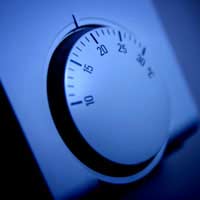
November has come and with it the first signs of winter. The clocks have gone back, the leaves are falling off the trees and we start to think ahead to Christmas. It’s also when our energy bills shoot up. The central heating settles into its daily routine, we turn the lights on in the early afternoon and it’s a rare day that we can dry any washing outside. So it’s a good time to review whether we can improve the energy efficiency of our homes or workplaces. It might not even cost that much. There are now a range of subsidies for upgrading heating appliances and insulation, as well as installing renewable energy generators.

 We don’t know if we are going to see the snow and cold again that we did last winter, but as we discovered then, it is best to be prepared. Good loft insulation and getting cavity walls filled should be a priority. This helps keep the heat in and bills down. Most energy companies offer a subsidised service for installing the insulation, so it can be done at moderate cost and pay for itself within five years. Or if you want to do it yourself, energy supplier EON currently subsidises loft insulation material at Homebase, while British Gas subsidises a similar offer at B&Q. This includes a new range of loftboards that allow you to insulate your loft while simultaneously creating storage space. Meanwhile, if you are over 70 or on benefits, you can probably get the insulation done for free. Get in touch with your energy supplier or the Energy Saving Trust to find out more.
Winter Energy

There is a whole range of other measures you can take to save energy depending on your budget and the type and age of your house. Big expense items include fitting double glazing, replacing an old boiler with a condensing boiler or installing a wood-burning stove. Cheap but effective measures include draught-proofing doors and windows, changing to energy efficient lightbulbs and double insulating your hot water tank.

 The Energy Saving Trust also has details of a variety of grants and subsidies available to all householders, including some for installing your own renewable energy, such as solar or wind power or anaerobic digestion. New feed-in tariffs, where you get paid a guaranteed minimum for any electricity that you generate that is in excess of your needs and that you feed in to the national grid, make renewables much more cost effective.

Saving energy not only saves money on your household bills, but also saves on carbon emissions from energy generation, so you are also helping combat climate change at the same time.

Transition Haslemere has lots of good advice on energy efficiency compiled by local experts, including estimated payback times for various measures and contact details for grants and subsidies for more details on how to save energy and reduce your carbon footprint please click here and for details on grants you may be able to get and more useful tips click here.

For even more ideas you can go to the Energy Trust website just click here

The Energy Trust also has a local advice helpline: 0800 512 012.

Tags:

Schoolchildren’s View of Haslemere in 2030?

Winning Exhibit in Transition Haslemere Competition

What will a sustainable Haslemere look like in 2030?

This is a question that Transition Haslemere asked of pupils at Camelsdale School recently. Their response was encouragingly optimistic. The children built a model of how they thought their school would look in 20 years time. he cardboard model, which is now on show at Haslemere Museum, shows a variety of measures the children think could be put in place over that time. These include triple-glazed windows, thick ceiling insulation and a ‘green roof’ planted with sedum and wildflowers. Water butts collect rainwater for irrigating the school’s vegetable garden, which supplies the kitchen for healthy school dinners. Compost bins recycle waste. 

 here are solar panels on the school roof for water heating and in the corner of the grounds stands a wind turbine. Now it may turn out that the school is not well sited for a wind turbine but there is no doubt that Camelsdale School and other buildings in Haslemere will need to shift to more renewable sources of energy over the next 20 years, and where possible, local sources. 

The children’s model of the future is not one of austerity and gloom. Instead, it gives a picture of a thriving and more self-sufficient institution. By growing its own vegetables, the school will not only lower its carbon footprint, but save money and provide an outdoor classroom for biology and ecology lessons.The children’s proposals are also notable for their practicality. In fact, the model sets an example of things that many of us can start to do in our own homes. However, when we look at things like insulation, double glazing and solar panels we are faced with a number of questions. Given that most of us have limited time and budgets, what should be our priorities? Which will cut our energy bills the most? How long will loft insulation take to pay for itself compared with double glazing? Solar panels look like a good idea for heating water, but are they a good idea for generating electricity? What will have the most impact on our carbon footprint? 

Local engineer Sandy Polack has made a detailed study of these issues and answered these questions and others in a talk titled “Cost-effective ways to reduce your carbon footprint”. You can see his presentation here and read his article here.

Tags: , ,

Cost Effective Ways to Reduce Your Carbon Footprint

In the last of the 2010 series of Transition Haslemere Evenings Sandy Polak gave us a useful and interesting talk on the practical things we can do to reduce our Carbon Footprint while, at the same time, saving us money.

A copy of Sandy’s presentation is available here if you want to know more.

Transition Haslemere Evenings will be back in March 2011 with a new and exciting programme of monthly evening talks, films and other events. For more news keep an eye on the website and of course the newsletters.

DIY Food – Saturday 18th September

DIY Food Event at Haslemere Museum Sept 18th

As part of the food festival Transition Haslemere are celebrating Do-It-Yourself foods.

Come and see at the Haslemere Museum on Saturday September 18th between 12.00 and 4.00 pm.

There are talks on bee keeping at 12.30, how to get more out of your food and waste less at 1.30 and all you need to know about keeping chickens at 2.30.

As well as the talks there are stands and demonstrations on ginger beer making, herbal teas and tinctures, how to grind your own oats and the many things you can do with the humble blackberry. You can get to taste the wonderful Lurgashall wines and the produce from our Community Garden run at Lower Roundhurst Farm by the Transition Haslemere Landshare team.

And finally come and make your own smoothie on our cycle-powered smoothie maker!

Transition Haslemere Film – Wednesday August 25th

On Wednesday August 25th at 7.30 pm we are showing the inspirational film “Rebecca’s Wild Farm” at the Haslemere Museum.

The  film was made by the BBC Natural World and looks at how traditional and ecological farming methods can compete in the 20th century and how they will be essential as we enter a period of reducing availability of oil.

Wildlife filmmaker Rebecca Hosking investigates how to transform her family’s farm in Devon into a low energy farm for the future, and discovers that nature holds the key.

With her father close to retirement, Rebecca returns to her family’s wildlife-friendly farm in Devon, to become the next generation to farm the land. Realising that all food production in the UK is completely dependent on abundant cheap fossil fuel, particularly oil, she sets out to discover just how secure this oil supply is.

Alarmed by the answers, she explores ways of farming without using fossil fuel. With the help of pioneering farmers and growers, Rebecca learns that it is actually nature that holds the key to farming in a low-energy future

No reservations are necessary; entrance is free (but doations are welcome)

For more information see here

« Newer Posts - Older Posts »